

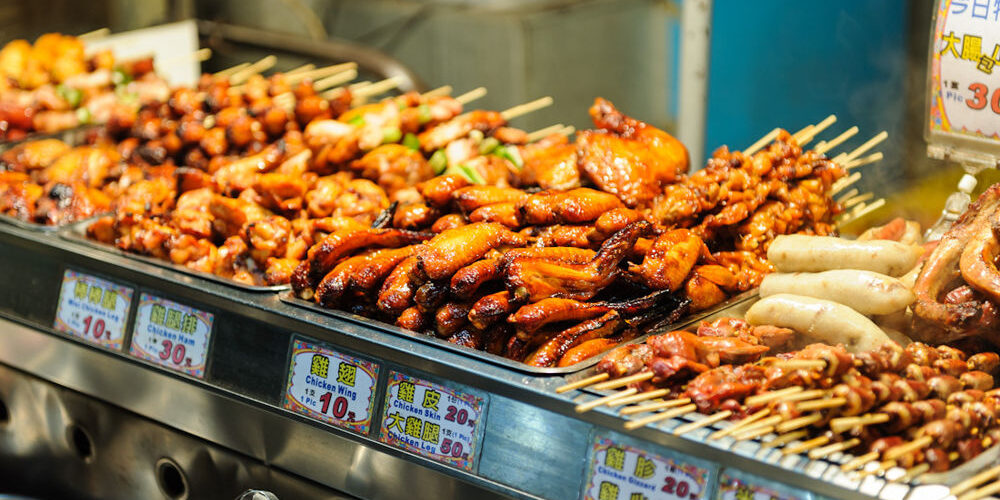
Street food is a form of mobile catering that has its origins in ancient times. Many of the customs associated with this type of service have their origins in ancient Asian traditions: in ancient China, street markets were common, with street vendors offering a variety of ready-to-eat foods. In India, too, street stalls selling regional specialities are a long-established practice, and countries such as Thailand, Vietnam and Indonesia have always considered street food an essential part of their culinary culture.
In Europe, street food has medieval origins, with markets and fairs providing ideal places to buy freshly prepared food. In the United States, the modern concept of street food began to spread in the late 19th century with the appearance of street vendors’ carts in cities.
However, it is in recent decades that street food has experienced a significant revival, thanks to the emergence of food trucks offering a wide range of cuisines. Today, street food continues to evolve, finding success in several key elements:
– Affordability: the opportunity to enjoy a variety of delicacies at affordable prices attracts a diverse audience.
– Gastronomic variety: it allows consumers to broaden their culinary horizons and appreciate cultural diversity through food.
– Innovation and creativity of chefs: the ability to reinvent traditional dishes and present culinary creations helps to keep consumers’ attention and distinguish street food from traditional catering.
– The speed with which food can be prepared and served: it adapts to the fast pace of contemporary life.
– Informality: it offers a relaxed and sociable alternative to more conventional forms of catering. After the pandemic, the renewed desire for socialising and the explosion of out-of-home consumption contributed to the adoption of a new consumption model, further promoting the spread of street food.
In Italy, events and festivals dedicated to street food have played a significant role in promoting this form of cuisine beyond established traditions. The success of street food has influenced the entire catering sector, from catering to restaurants in large theme parks, to the launch of products where street food is the protagonist or the means to make brand activation more appealing.
In conclusion, street food continues to be a bridge between different cultures through the universal language of food, helping to create a rich and diverse global culinary fabric.
Read this article on LinkedIn too.